Try PlayAblo LMS risk Free?

With PlayAblo LMS your team can learn
at their preferred pace and place. Let us show you how!


Previous Next
 
https://campaign-image.com/zohocampaigns/587716000004752004_zc_v32_1615382508002_newsletter_header.png

Workforce re-skilling and upskilling have become hot subjects of discussion in both academia and business. The digitization of work and artificial intelligence, often known as the Fourth Industrial Revolution, is driving the focus on skills, which has escalated due to the COVID-19 pandemic. According to the World Economic Forum, one billion jobs, nearly one-third of all jobs today, will undergo transformation with 133 million new jobs created to match future demand. This transformation is impossible to achieve without the use of workforce re-skilling and upskilling tools.

While skilling is a hot topic, many human resource executives are unsure how to adopt and enforce a successful skilling strategy. According to PwC’s 2020 Annual Worldwide CEO Survey, only 17% of US CEOs and 30% of global CEOs thought their upskilling initiatives helped speed up digital transformation. Where do the chasms exist?

We’ve noticed that the world of adult learning is rapidly changing as organizations attempt to upskill and reskill their workforces. As a result, businesses may shape their reskilling and upskilling programs based on obsolete information and fallacies. Let’s debunk some of these myths for you.

7 Myths About Workforce Re-skilling (and the Truths!)
Myth #1: Training programs are met with skepticism by employees

Employers are hesitant to implement workforce re-skilling programs because they believe it will not be worth the cost of employees unwilling to participate. This myth, however, is far from the truth. According to RiseSmart’s worldwide skilling survey, 55 percent of employees desire to learn new skills or refresh current ones. Around 94 percent of employees who participated in skilling projects in 2020 said they put their new or refreshed talents to use in a meaningful way, either fully or partially.

Did you know

https://campaign-image.com/zohocampaigns/587716000004752004_zc_v7_1629259236034_qwtcej5clys.jpeg

One of the major reasons eLearning is so well-liked by companies and employees alike is due to the use of micromodules. Learning high-value concepts delivered in bite-sized chunks helps fast-track employee understanding and on-the-job application. Microlearning increases learner efficiency by 17% and 94% of eLearners prefer this method specifically because it integrates well with daily job tasks. [Source]

https://campaign-image.com/zohocampaigns/587716000004752004_zc_v5_1629816514937_jlj_nbvlddo.jpeg

The 2021 LinkedIn Learning Workplace Report found that 76% of Gen Z learners felt that learning is key to a successful career, and online training was at an all-time high for this generation. [Source]


Workplace Learning Opinions From Across the Globe

E-LEARNING RETENTION STRATEGIES THAT WILL IMPROVE YOUR COMPANY TRAINING

The eLearning goals of organizations are to increase value and reduce cost. Learners forget most of what they learn within the first 48 hours of learning. But, there is a pattern to it. They may forget the concepts taught, but they will remember certain nuggets of information and examples. That pattern must be gauged while designing eLearning training solutions. It is important to ensure that learners retain the knowledge they learned so that they can apply it at work. Here are the top 5 best retention strategies that you can apply to your design.


Workplace Learning Report Linkedin

In this fifth year of the Workplace Learning Report by Linkedin, experts describe how learning has moved from a relatively new discipline within HR
to taking centre stage and becoming a must-have strategic role
that will help shape the new world of work. 


Learning to Learn: Preparing People for Lifelong Performance & Results

This article synthesizes many astonishing observations about why the most important thing to learn in an organisation is how to learn–the habit of continuous learning. More specifically, it underlines specific practices for enabling young people to discover learning and the joy of learning. 


Employee satisfaction of corporate e-training programs

This study aims to examine the level of employee satisfaction in companies where e-learning is used as a corporate training tool. Regression analyses are made to determine the effects of gender, age, work experience, education level, job level and e-learning interactivity level of the employees on the reaction-based and learning-based satisfaction of the e-learners.

     

PlayAblo™ LMS | Product News

https://campaign-image.com/zohocampaigns/587716000004752004_zc_v3_1628513070522_hpjsku2uysu.jpeg

Standard Reports not enough? Get your daily data extract!

Often times standard reports are just not enough to provide you with the insight your team and management needs. PlayAblo™ LMS now provides you access to your organisation's entire learning data every day. You can now use external data visualisation tools such as Google Data Studio and generate additional reports.


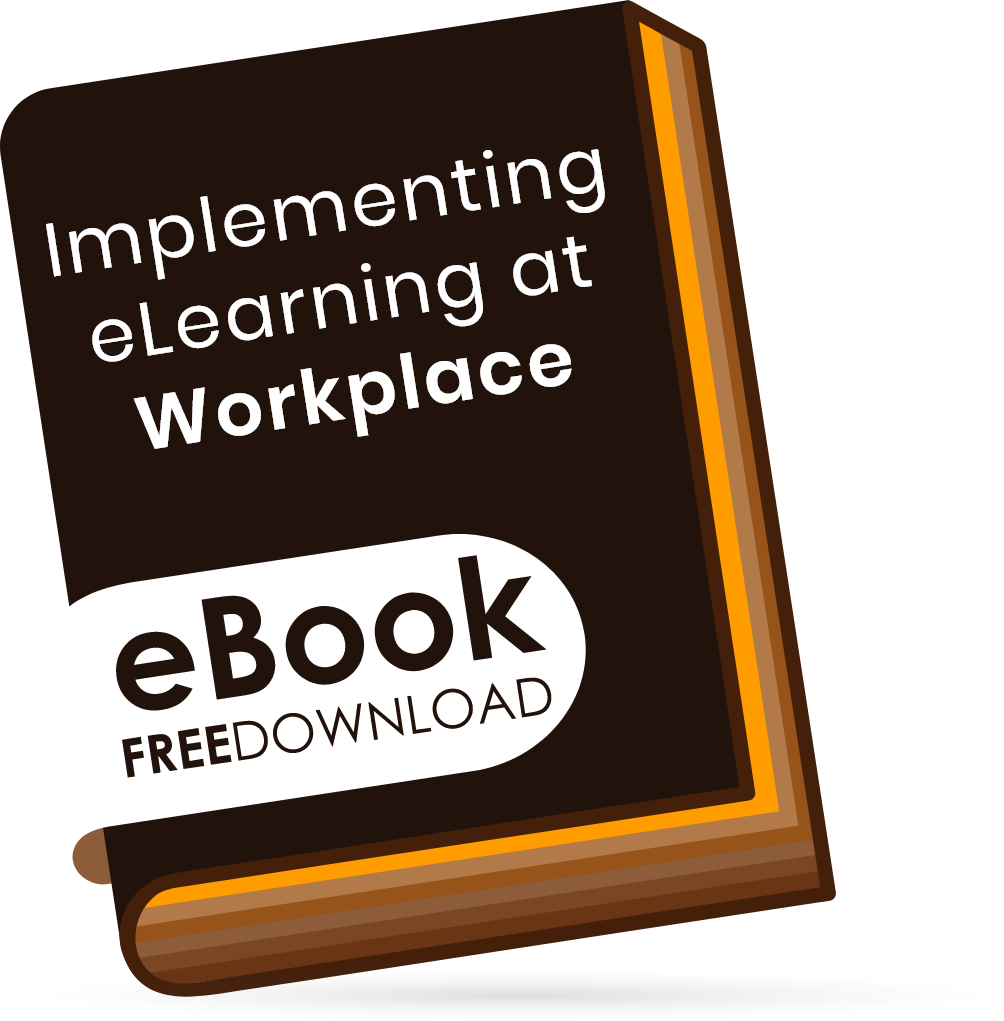
Get PlayAblo's comprehensive eBook with in-depth articles and advisory on Implementing eLearning at the Workplace.

Learn about: 1. Evolution of eLearning 2. Approach to selecting an LMS 3. Learning traits of your workforce today 4. Implementing, Boosting adoption and Ensuring success of your LMS Platform.

     
Suchitra Premkumar | PlayAblo

Suchitra Premkumar

Co-Founder and Head Corporate Learning, PlayAblo

+91.93420.43420   |   suchitra@playablo.com    |   LinkedIn    |   Awards

Download our FREE eBook on Implementing eLearning at Workplace

     
We hope you like our newsletters. If you don't, simply unsubscribe.
GO SHARP TECHNOLOGIES AND CONSULTING PRIVATE LIMITED
3rd & 4th Floor, Aishwarya Complex, Bellandur Gate, 3/2 Sarjapur Main Road, Bangalore - 560103